29/04/2026
Education, Art, and Health: How Chagas Month Was Marked in Paraguay
TAGS:
Education, Art, and Health: How Chagas Month Was Marked in Paraguay
29/04/2026
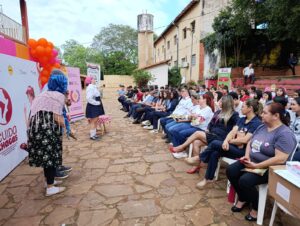
As part of World Chagas Disease Day, the city of Paraguarí hosted an educational and participatory event that combined learning, art, and health. The activity took place at Colegio San Roque González de Santa Cruz, where students, teachers, and health teams shared spaces for awareness and prevention.
More than one hundred high school students attended an informational session led by Mónica Ramírez, implementation manager of the project in Paraguay and head of the National Chagas Disease Control Program at Servicio Nacional de Erradicación del Paludismo (SENEPA). During her presentation, she explained the origin of the disease’s name and recalled that World Chagas Disease Day is commemorated every April 14, in reference to the discovery made by Brazilian physician Carlos Chagas in 1909.
She emphasized that Chagas is a silent disease that can manifest decades after infection, often with serious heart complications. In this regard, she highlighted the importance of early diagnosis, access to treatment, and timely information for prevention.
The school’s principal, Prof. Gloria Arce, welcomed the delegation from the Ministry of Public Health and Social Welfare and the project team, encouraging students to actively participate in the activities with commitment and respect.
As part of the event, the comic magazine Berenice was introduced—an educational initiative that portrays the daily life of a Paraguayan family and encourages, especially young women, to take rapid diagnostic tests.
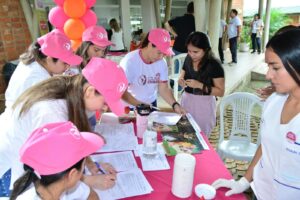
The theatrical play Chau chau, Chagas was also performed, promoting self-care within families and communities. The presentation generated strong engagement among teenagers, who later accessed screening services provided by local and central-level health personnel.
The event also featured a circuit of educational games designed to reinforce key messages about family and community health. Highlights included a giant puzzle based on the characters from Berenice and a themed hopscotch game with varying levels of difficulty.
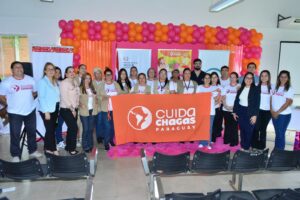
In addition to Paraguarí, activities were also carried out in the municipalities of Caacupé, Villa Elisa, and Concepción. In Villa Elisa, the country’s main event featured a vibrant day that brought together authorities, healthcare professionals, students, and local residents. Project leaders and health authorities presented the national situation; a theater group performed a play to raise awareness about the importance of early detection of the disease; and, finally, mass testing was carried out at the Ciudad Mujer complex.
In Concepción, the World Chagas Disease Day commemoration included a training seminar on Chagas disease, covering its origin, types of transmission, prevention methods, the importance of early detection, and available treatments. The main activity took place at the Instituto Rosa Mística. On that occasion, mass testing was also conducted in the community. In addition, project staff and technicians from the Ministry of Public Health and Social Welfare visited other educational and community centers, delivering awareness talks and conducting rapid testing.
Although World Chagas Disease Day is observed on April 14, activities take place throughout the month across the country to raise awareness, promote early diagnosis, and strengthen access to care. This observance was established by the World Health Organization to increase public awareness and reinforce the health response.
The CUIDA Chagas Project is implemented in Brazil, Bolivia, Colombia, and Paraguay. In Paraguay, it is coordinated by the Ministry of Public Health and Social Welfare through SENEPA. The initiative aims to improve access to timely diagnosis—especially for women—by promoting a comprehensive approach to prevention and care.
With information from SENEPA.